
Playroom Architect, a resource providing engineering-first guidance for safe children's play spaces, has published practical guidance for parents following two federal recalls involving water-bead-filled squishy toys. The U.S. Consumer Product Safety Commission announced the recalls on October 1, 2026, covering products that concealed expanding water beads inside soft toy exteriors, a detail that many parents may overlook when selecting sensory-play materials.
The October 1 action involved approximately 37,000 squishy dumpling and Crazy Squib Ball toys, along with roughly 480 additional Mochi Malrang Mystery Dumpling toys. Both recall notices stated that no incidents or injuries had been reported for the specific recalled products. The recalls followed a new mandatory federal safety standard for water-bead toys manufactured after March 12, 2026, which introduced expansion limits, acrylamide limits and required warnings.
The central concern highlighted by the recalls is that water beads are not always sold as loose sensory-play materials. They can be concealed inside toys that appear soft and child-friendly, meaning a toy's exterior alone does not indicate what it contains. Water beads can expand significantly after ingestion, and separate historical data from the CPSC estimated about 6,300 emergency-department-treated water-bead ingestion injuries between 2017 and 2022, with at least one reported death in 2023. That historical statistic is not connected to the specific products recalled in October.
The company's materials stress that supervision does not replace careful material selection. Unsuitable items should be removed before an activity begins, and child-accessible storage should be organized separately from adult-managed storage. The Playroom Architect Sensory Play Safety Guide outlines a pre-activity checklist that includes checking small components, removing button batteries and loose magnets, and setting supervision levels for each session.
Playroom Architect's published guidance recommends leaving water beads out of home sensory bins entirely and encourages parents to examine what a toy contains rather than relying on its outward appearance. The company's approach emphasizes screening every activity for the youngest child who can reach it, accounting for ingestion, choking and mouthing risks before play begins.
"The recalls are a reminder that the most important safety decisions happen before an activity starts, not during it," said Oded Feigin, founder of Playroom Architect. "A toy that looks soft and harmless can still hold materials that expand after they are swallowed. Parents benefit from knowing what is inside a product, not just how its surface feels."
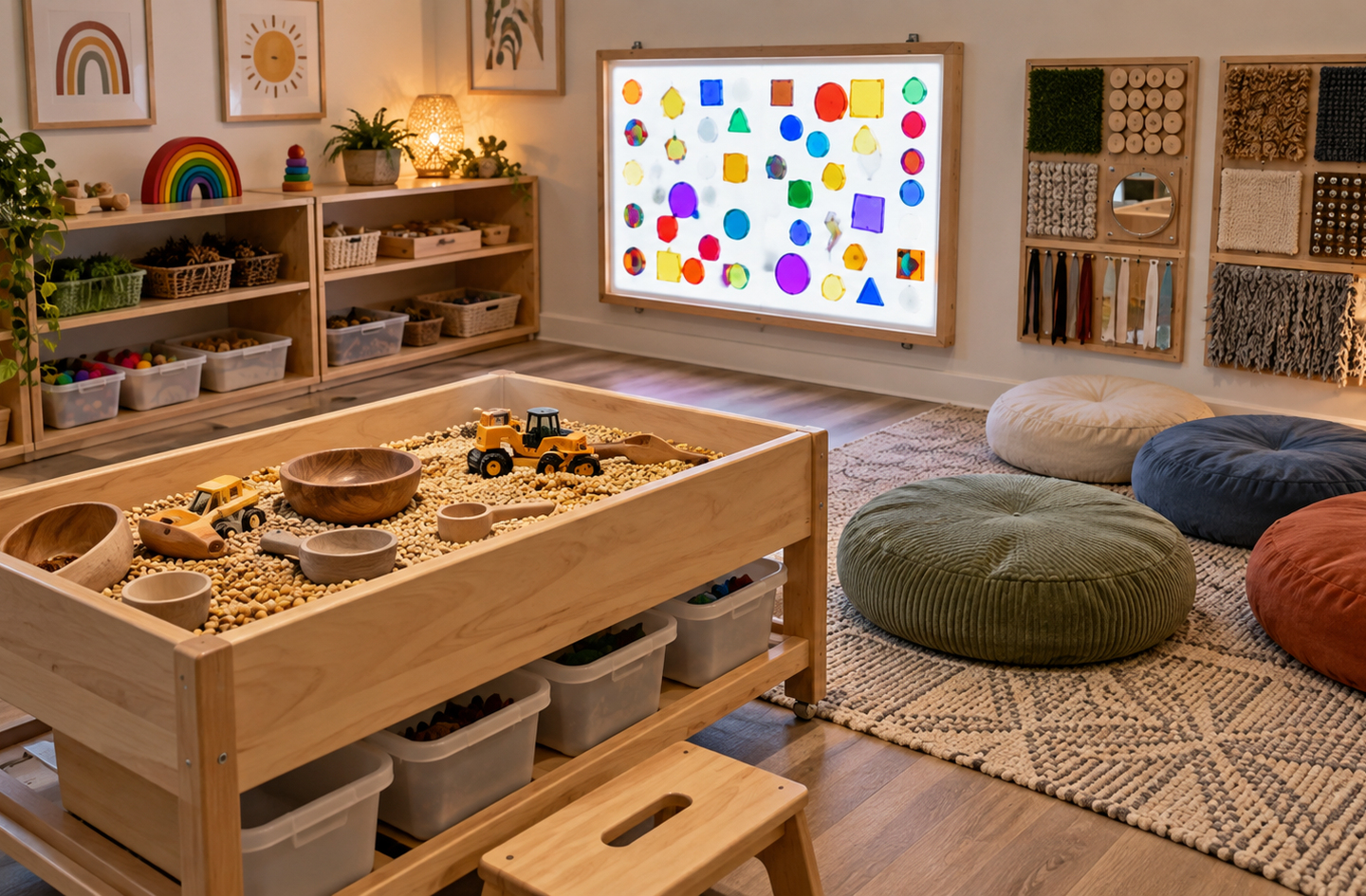
For families seeking alternatives, Playroom Architect notes that substitute materials still require their own evaluation. The Playroom Architect Sensory Play Spaces Guide describes how to build supervised sensory experiences around large-piece textures, washable surfaces and contained activities, while cautioning that no alternative should be assumed safe without review.
"Every material deserves its own check," Feigin added. "Planning the space around the materials, rather than fitting materials into whatever space exists, gives parents a clearer path to safer play."
Playroom Architect provides expert-led guidance, product reviews and organized topic hubs covering layout, safety, developmental zoning and storage logic for indoor children's play spaces. Founded by Oded Feigin, who brings decades of experience across engineering, production and residential construction, the company focuses on structural safety, functionality and developmental fit. Playroom Architect does not sell its own products and does not accept paid placements.
###
For more information about Playroom Architect, contact the company here:
Playroom Architect
Oded Feigin
info@playroomarchitect.com
144-42 Jewel Avenue
Flushing, NY 11367
United States