Concerned Citizens for Natural Gas Safety Urges Immediate Action as NYC Local Law 157 Compliance Deadline Approaches
PR Newswire
CHICAGO, March 27, 2026
CHICAGO, March 27, 2026 /PRNewswire/ -- With less than a year remaining before enforcement begins, Concerned Citizens for Natural Gas Safety (CCNGS) is calling on property owners, managers, and housing stakeholders to accelerate preparations for compliance with New York City Local Law 157, which mandates the installation of natural gas alarms in residential buildings by January 1, 2027.

The organization warns that delayed action could result in compressed installation timelines to meet the compliance deadlines as demand intensifies across New York City's housing market.
"Local Law 157 represents a major step forward in protecting residents from the dangers of undetected natural gas leaks," said Stacey McClenathan, a spokesperson for Concerned Citizens for Natural Gas Safety. "But compliance is not just about meeting a deadline, it's about making informed decisions that directly impact life safety."
New Requirements Signal Shift Toward In-Home Gas Detection
Local Law 157 requires natural gas alarms in:
- Multi-family residential buildings (Class A and Class B)
- Rental units
- Certain private dwellings
The law also establishes ongoing responsibilities for property owners, including installation, maintenance, and replacement of alarms, as well as documentation of compliance.
Placement Guidance Reflects How Natural Gas Behaves
According to New York City guidance, gas alarms must be:
- Installed no closer than 3 feet or further than 10 feet of gas-burning appliances
- Mounted on the ceiling or high on the wall (within 12 inches of the ceiling)
- Located in rooms where gas appliances are present
Because natural gas (methane) is lighter than air and rises, proper placement is essential for early detection.
"Where and how an alarm is installed can significantly impact its effectiveness," the spokesperson added. "Devices placed too low or outside of recommended zones may delay detection."
Property Owners Face Increased Accountability
Under the law, property owners and managers are responsible for:
- Installing compliant alarms
- Replacing alarms over time
- Maintaining compliance records
- Ensuring tenant safety
Industry observers note that these requirements elevate alarm selection from a routine purchase to a risk management and liability decision.
Experts Warn Against Low-Cost, Non-Compliant Devices
As the compliance deadline approaches, Concerned Citizens for Natural Gas Safety cautions that an influx of inferior natural gas alarms could leave occupants vulnerable to nuisance alarms or a defective gas leak detection device.
"Not all natural gas alarms are designed for real-world conditions," the spokesperson said. "Choosing an alarm based solely on price, without considering placement, detection capability, and certification can introduce risk rather than reduce it."
Key factors stakeholders should evaluate include:
- Certification to recognized standards such as UL 1484
- Compatibility with ceiling or high-wall installation requirements
- Ability to detect methane leaks early enough to allow evacuation
- Reliable power sources, with battery powered preferred
- Clear, actionable alert systems, preferably voice alerts
- Resistance to nuisance alarms
- Manufacturer experience and accountability
Part of a Broader National Safety Movement
Local Law 157 reflects a growing national focus on layered safety strategies that combine infrastructure monitoring, appliance maintenance, and in-home detection.
"Natural gas is widely used and generally safe," the spokesperson said. "But when leaks go undetected, the consequences can be severe. Alarms inside the home provide a critical additional layer of protection."
Product Considerations for Compliance
While Concerned Citizens for Natural Gas Safety does not endorse specific manufacturers, the organization encourages stakeholders to evaluate products carefully against established safety criteria.
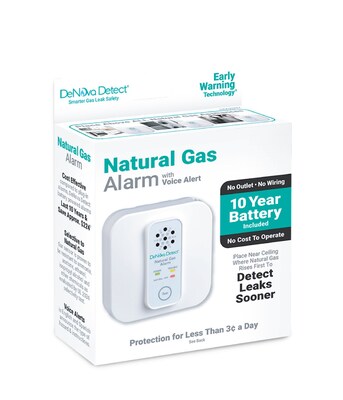
Some manufacturers, including DeNova Detect, offer natural gas alarms designed to align with modern safety expectations, including:
- Long-life battery operation, such as a 10-year battery
- Installation consistent with NYC placement guidance, and NFPA 715 installation guidelines
- Voice alerts designed to guide occupants during emergencies
- Technology focused on early methane detection
Stakeholders are advised to verify certifications, installation requirements, and performance characteristics when selecting products. DeNova Detect's distinguishing feature of voice alerts help occupants discern a natural gas leak with emergency instructions versus other household alarm beeps.
Media Contact: Concerned Citizens for Natural Gas Safety Kiely Kruse +1 708.267.4505 PreventNaturalGasDisasters.com Email: kielyk@beecommunications.com
Concerned Citizens for Natural Gas Safety is a public awareness initiative dedicated to promoting education, advancing safety standards, and encouraging practical solutions to reduce the risks associated with natural gas in residential environments. The organization works to inform property owners, policymakers, and the public about best practices in detection, prevention, and response. www.preventnaturalgasdisasters.com
 View original content to download multimedia:https://www.prnewswire.com/news-releases/concerned-citizens-for-natural-gas-safety-urges-immediate-action-as-nyc-local-law-157-compliance-deadline-approaches-302726878.html
SOURCE Concerned Citizens for Natural Gas Safety
