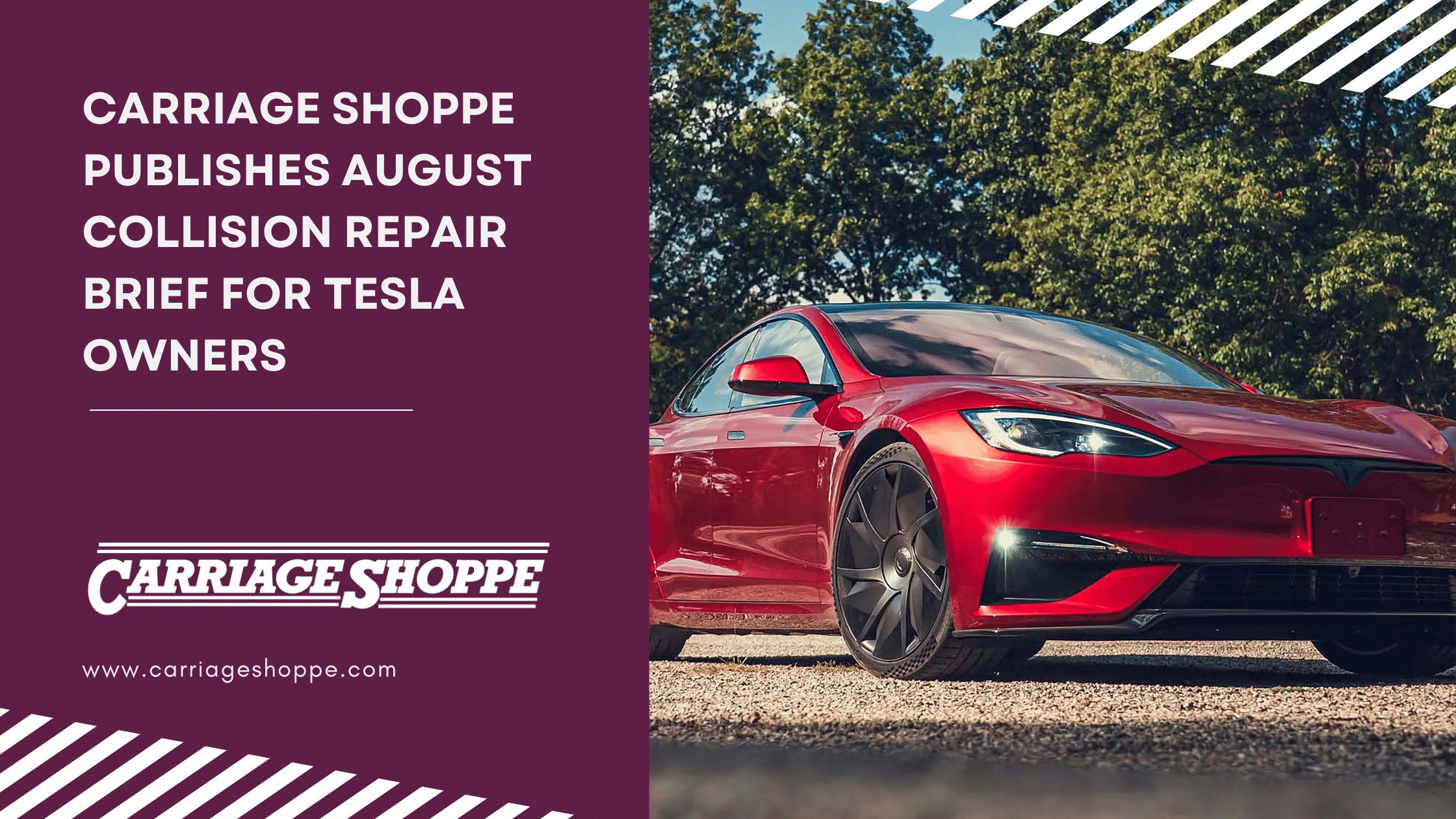
Carriage Shoppe has published an August consumer brief outlining four considerations Tesla owners may encounter after a collision: vehicle-specific repair procedures, mixed-material body construction, electronic and driver-assistance systems, and high-voltage vehicle considerations.
The new material expands the Tesla repair information available through Carriage Shoppe by bringing those four topics into a single consumer reference. It is intended to explain why collision repair planning for a Tesla can depend on the model, affected components, installed equipment, and procedures applicable to the individual vehicle.
Carriage Shoppe operates in Fort Collins as part of Yoder Collision Network, the collision repair division of the Yoder Family of Companies. Information about the facility's Tesla repair program is available directly through Yoder Collision Network's Tesla certification page.
The first section of the August brief addresses manufacturer repair procedures. Rather than treating similar-looking exterior damage the same across different vehicles, technicians can identify the Tesla model and affected components before determining which repair information applies.
This becomes relevant when deciding how an affected component should be evaluated, repaired, removed, replaced, or refinished. The visible size of a dent or damaged area is only one piece of information used during repair planning.
The second section explains vehicle construction and materials. Depending on the model and component, Tesla vehicles can incorporate different materials and construction methods. The repair approach therefore depends on the specific area involved and applicable manufacturer information rather than a single procedure for every damaged exterior component.
The August brief also explains why an initial exterior inspection may not provide all information used in a repair plan. Bumper covers, trim, panels, and other exterior components can limit access to attachment points, brackets, fasteners, reinforcements, and adjacent areas.
If component removal becomes appropriate during repair planning, technicians can document the condition of areas that were previously inaccessible. The brief does not suggest that those areas should be presumed damaged; repair decisions are based on conditions identified on the individual vehicle.
A third section addresses electronic and driver-assistance technology. Tesla vehicles incorporate cameras and other electronic systems whose locations and functions can vary by model and configuration.
When collision repair involves areas associated with this equipment, vehicle-specific information can determine whether inspections, diagnostics, calibrations, or other procedures apply. The August brief specifically avoids presenting any of these operations as an automatic requirement following every collision.
This distinction gives consumers context for why electronic procedures may appear on one repair plan but not another, even when exterior damage initially looks similar.
The fourth new section concerns high-voltage vehicle considerations.
As battery-electric vehicles, Tesla models incorporate high-voltage systems that require technicians to account for applicable manufacturer procedures when repair operations involve relevant areas or components. The presence of a high-voltage system does not mean every collision affects the battery or requires an identical repair process.
Instead, the impact location, components involved, work being performed, and applicable vehicle information determine which procedures are relevant to a particular repair.
Carriage Shoppe included the high-voltage section to help consumers distinguish electric-vehicle collision repair from assumptions that every accident involving an EV creates the same battery-related concerns.
The August brief also provides a simplified explanation of repair planning. Depending on documented damage, a collision repair can involve component removal, parts research, body or structural operations, refinishing, electronic procedures, reassembly, and final verification.
Those operations are coordinated according to the needs of the individual vehicle rather than treated as unrelated repair steps.
For Tesla owners reviewing collision repair documentation, Carriage Shoppe identifies several practical questions that can help clarify the process: Which components were affected? Which vehicle-specific procedures apply? Did additional information become available after component removal? Which diagnostic or calibration procedures, if any, are included in the repair plan?
The questions are intended to help consumers understand repair documentation without requiring them to determine technical repair procedures themselves.
The August publication also addresses a common distinction between vehicle appearance and repair planning. A vehicle that remains drivable after a collision is not necessarily free of repair needs, just as visible exterior damage does not establish that additional components have been affected.
Inspection findings and applicable vehicle information provide the basis for determining the scope of an individual repair.
By organizing the information around four defined topics, Carriage Shoppe's August brief gives Tesla owners a more concise reference for understanding why their repair process may include procedures beyond conventional exterior body work.
The publication also complements Yoder Collision Network's broader OEM certification information, which provides additional context about manufacturer-specific collision repair programs.
Carriage Shoppe's Tesla repair information and the basis for its Tesla-specific repair capability can be reviewed directly through the Yoder Collision Network Tesla certification resource.
About Carriage Shoppe
Carriage Shoppe is a Fort Collins collision repair facility operating as part of Yoder Collision Network, the collision repair division of the Yoder Family of Companies. The facility provides collision repair, repair planning, refinishing, and manufacturer-specific vehicle restoration services. Information about its Tesla repair program is available through Yoder Collision Network's Tesla certification resource.
###
For more information about Carriage Shoppe, contact the company here:
Carriage Shoppe
Micah
970 482 3597
officestaff@carriageshoppe.com
327 S Link Ln, Fort Collins, CO 80524